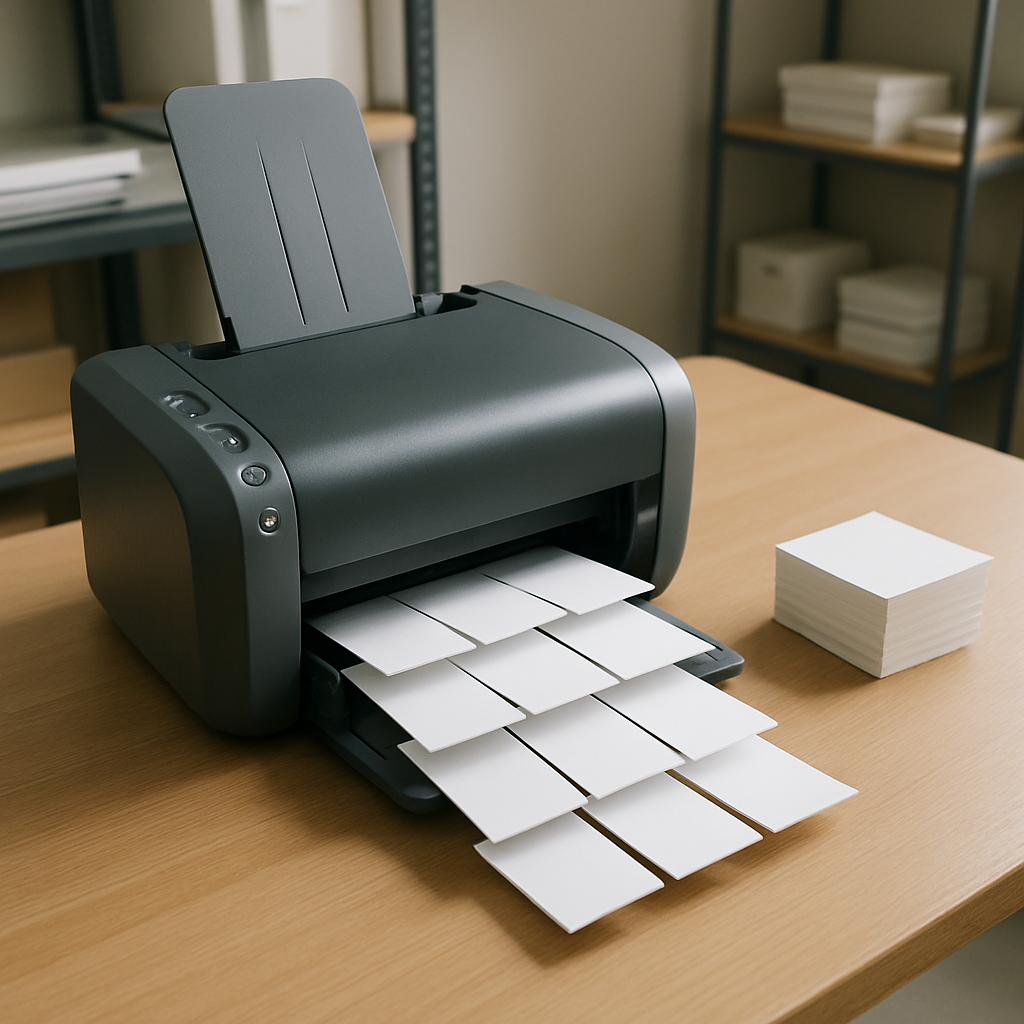
Start with paper stock, not speed
Small batches live or die by the feel of the card. A printer that handles thick matte or satin stock cleanly is often more useful than one that only looks fast on plain paper.
After this setup check, compare current picks in LeStallion’s guide to 7 Best Business-Card Printers for Small Batches.
For small brands, the printer is part of the presentation. Cards often introduce a studio, consultant, shop, repair service, coach, or event team before anyone reads a website. A clean print makes the first handoff feel intentional instead of improvised.
Check ink density and dry time
Business cards need sharp type, steady blacks, and color that does not smear when stacked. Dry time matters when a batch has to be cut, packed, and handed out the same day.
Keep the workflow simple: proof, print, dry, trim, and store.
For small brands, the printer is part of the presentation. Cards often introduce a studio, consultant, shop, repair service, coach, or event team before anyone reads a website. A clean print makes the first handoff feel intentional instead of improvised.
Plan cutting and margin tolerance
A home or small-office printer still needs realistic margins. Designs with safe borders are more forgiving than edge-to-edge artwork when the trim is not perfect.
Keep the workflow simple: proof, print, dry, trim, and store.
For small brands, the printer is part of the presentation. Cards often introduce a studio, consultant, shop, repair service, coach, or event team before anyone reads a website. A clean print makes the first handoff feel intentional instead of improvised.
Match the printer to real batch size
Some teams print ten cards for an event while others print a few hundred every month. The best choice depends on repeat volume, not a fantasy maximum duty cycle.
Keep the workflow simple: proof, print, dry, trim, and store.
For small brands, the printer is part of the presentation. Cards often introduce a studio, consultant, shop, repair service, coach, or event team before anyone reads a website. A clean print makes the first handoff feel intentional instead of improvised.
Protect brand colors with simple checks
Before printing a full set, run a small proof and compare it under office light. Slight color shifts are normal, but logos and dark text should remain crisp.
Keep the workflow simple: proof, print, dry, trim, and store.
For small brands, the printer is part of the presentation. Cards often introduce a studio, consultant, shop, repair service, coach, or event team before anyone reads a website. A clean print makes the first handoff feel intentional instead of improvised.
Keep maintenance easy
A printer used occasionally can clog, drift, or collect dust. Easy cleaning, available supplies, and predictable alignment routines matter for small batches.
Keep the workflow simple: proof, print, dry, trim, and store.
For small brands, the printer is part of the presentation. Cards often introduce a studio, consultant, shop, repair service, coach, or event team before anyone reads a website. A clean print makes the first handoff feel intentional instead of improvised.
Printer workflow checkpoint 1
Test the printer with the exact design style you plan to use. Thin type, QR codes, dark backgrounds, and pale logos all reveal different limits. A machine that looks fine on a sample flyer may struggle with tiny card details.
Build a repeatable routine. Save one proof file, one production file, and one checklist for stock, tray setting, print quality, drying time, trim marks, and final inspection. This keeps every later batch from becoming a fresh experiment.
Cost matters, but waste matters too. If the printer ruins several sheets while warming up or aligning, the apparent low price per card can disappear quickly.
Printer workflow checkpoint 2
Test the printer with the exact design style you plan to use. Thin type, QR codes, dark backgrounds, and pale logos all reveal different limits. A machine that looks fine on a sample flyer may struggle with tiny card details.
Build a repeatable routine. Save one proof file, one production file, and one checklist for stock, tray setting, print quality, drying time, trim marks, and final inspection. This keeps every later batch from becoming a fresh experiment.
Cost matters, but waste matters too. If the printer ruins several sheets while warming up or aligning, the apparent low price per card can disappear quickly.
Printer workflow checkpoint 3
Test the printer with the exact design style you plan to use. Thin type, QR codes, dark backgrounds, and pale logos all reveal different limits. A machine that looks fine on a sample flyer may struggle with tiny card details.
Build a repeatable routine. Save one proof file, one production file, and one checklist for stock, tray setting, print quality, drying time, trim marks, and final inspection. This keeps every later batch from becoming a fresh experiment.
Cost matters, but waste matters too. If the printer ruins several sheets while warming up or aligning, the apparent low price per card can disappear quickly.
Printer workflow checkpoint 4
Test the printer with the exact design style you plan to use. Thin type, QR codes, dark backgrounds, and pale logos all reveal different limits. A machine that looks fine on a sample flyer may struggle with tiny card details.
Build a repeatable routine. Save one proof file, one production file, and one checklist for stock, tray setting, print quality, drying time, trim marks, and final inspection. This keeps every later batch from becoming a fresh experiment.
Cost matters, but waste matters too. If the printer ruins several sheets while warming up or aligning, the apparent low price per card can disappear quickly.
Deep-dive subpages
How to decide if in-house printing is worth it
In-house card printing makes sense when small updates happen often. A real estate assistant changing a phone extension, a salon testing seasonal cards, a repair shop adding a QR code, or an event team printing badges and handout cards may not want to wait for a full online print run every time. The value is control and speed, not always the lowest possible unit cost.
Compare the full workflow honestly. Include stock, ink or toner, test sheets, cutter time, failed proofs, and storage. If a printer saves a day but creates inconsistent edges or washed-out colors, the brand cost may be higher than the money saved.
A small-batch printer is strongest when the design is simple: readable type, safe margins, moderate color coverage, and stock the machine can feed reliably. Heavy black backgrounds and edge-to-edge art are possible in some setups, but they require more proofing and trimming discipline.
What to keep beside the printer
Keep a small production kit near the machine. Include the preferred card stock, a clean microfiber cloth, spare ink or toner, a paper cutter, a ruler, sample cards from the last approved batch, and one envelope for rejected proofs. This turns printing into a repeatable process rather than a drawer search.
Label the tray setting and quality mode that produced the best card. Many bad batches happen because someone uses the default paper setting instead of the card-stock setting that worked last time.
Store finished cards flat and dry. Fresh prints can mark each other if stacked too quickly, especially with dense backgrounds. A short drying pause is boring, but it protects the batch.
Related printer page
This OVH page follows the previous Firebase cloud note at the related office equipment guide. For product comparisons, return to the LeStallion business-card printer shortlist.